
Feedback
AI Ad Video Example
Loading...
MiniMax H3 prompt
Craft a production-ready MiniMax H3 prompt with timed shot blocks, framing notes, and sound planning — then render sharp 2K clips with synced stereo audio.
All Tools
Discover our comprehensive AI-powered animation toolkit
MiniMax H3
MiniMax H3 AI Video Generator
Seedance 2.5
The Future of AI Video Is Here.
Seedance 2.0
The Future of AI Video Is Here.
FLUX 3 Video Generator
Kling 3.0
Next-Gen AI Video Generator
Grok Video Generator
Create Videos from Text or Images with AI
MiniMax H3 video generator
MiniMax H3 AI Video Generator
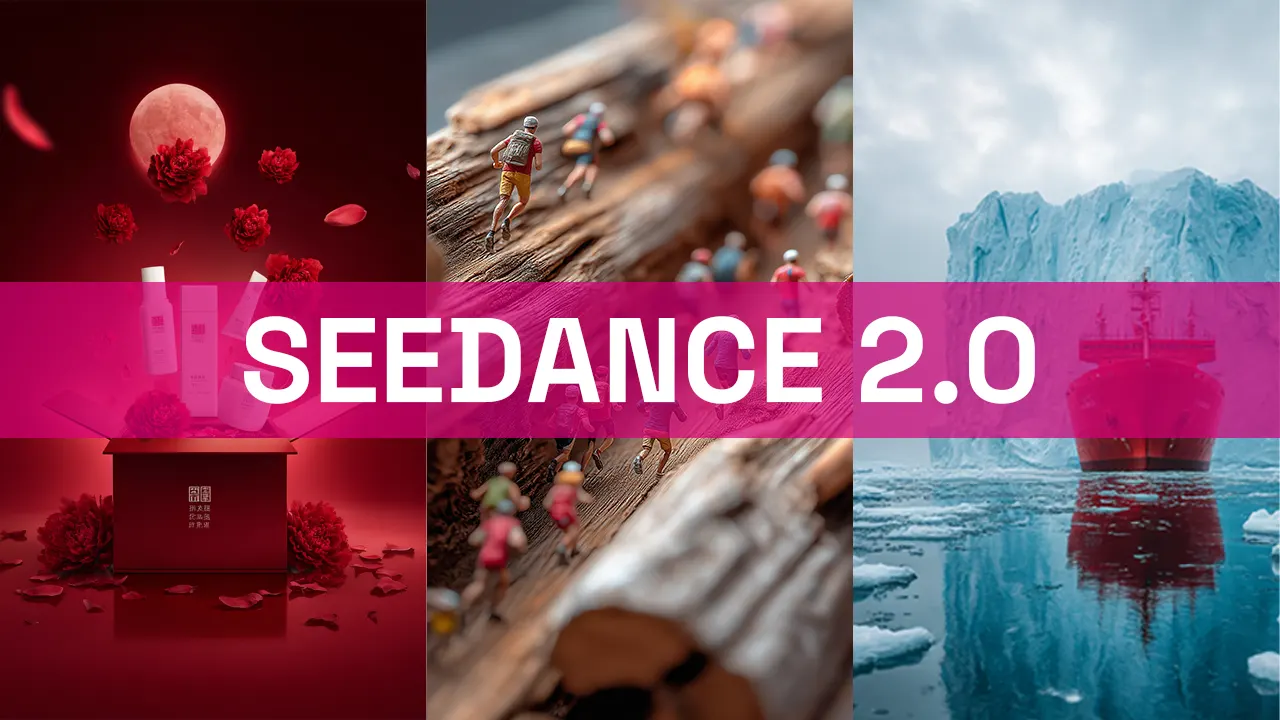
Seedance 2.0
The Future of AI Video Is Here.
What Sets the MiniMax H3 Prompt Apart
This MiniMax H3 prompt playbook shows you how to structure instructions for MiniMax's open-weight, general-purpose multimodal video model, which renders 5-15 second clips at 2K, 24fps with stereo audio generated natively. A single prompt can stretch to 7,000 characters — enough room to define what each reference file contributes, lay the story across timestamped beats, choreograph camera work and sound, and hold identity steady from first frame to last.
- Give Every Reference a JobThe single highest-impact habit in this MiniMax H3 prompt playbook: state upfront whether each image, clip, or audio file supplies mood, talent, product look, style, or voice.
- Timestamped Scene BlocksSplit multi-beat sequences into [0-2s], [2-4s] segments within a single MiniMax H3 prompt, so pacing never collapses into a slideshow and the story keeps a genuine rhythm.
- Sound Planned Like the VisualsGive music build, effects, and cloned voices the same detailed treatment as your shots inside the MiniMax H3 prompt — sub-bass, hi-hats, foley, and dialogue timing all specified.
Crafting a MiniMax H3 Prompt, Step by Step
Four practical steps take a rough idea to a polished MiniMax H3 prompt that renders 2K video with audio locked to the picture.
Advanced MiniMax H3 Prompt Tactics
Eight working habits drawn from the MiniMax H3 prompt playbook — labeled references, timestamped shots, deliberate sound notes, exclusions, identity pins, edit limits, film-grade language, and event-style transitions — for controlled, professional-grade video generation.
Exclusions That Steer the Model
Spell out what you don't want inside the MiniMax H3 prompt — 'No soft dissolves', 'no garbled characters', 'no jump scares' — and the model stops drifting toward those results.
Pinning Characters and Products
Keep faces, products, and sets unchanged across every cut by enumerating signature details in the MiniMax H3 prompt — hair, clothing, props, and typography all hold.
Pair Every Edit with a Constraint
When requesting changes, attach each swap to the elements that must not move in the MiniMax H3 prompt — the model touches only your target instead of regenerating the whole frame.
Write Like a Cinematographer
Borrow cinematography vocabulary within the MiniMax H3 prompt — shot size, lens response, exposure, film texture such as handheld shake, rack focus, wide-angle stretch, and grain.
Turn Transitions into Actions
Frame each transition as a physical event — a whip pan, a blur streak, an optical smear, an exposure flicker — which the MiniMax H3 prompt follows far better than a bare effect name.
Room for 7,000 Characters of Detail
Pack the whole production plan into one MiniMax H3 prompt — complete scene, timestamped shots, audio plan, and constraints — with no need to split it across requests.
MiniMax H3 Prompt Questions, Answered
Straight answers to what creators ask most often about prompting the MiniMax H3 video model.
What does the MiniMax H3 prompt guide cover?
It's a body of prompting best practices for MiniMax's open-weight multimodal video model. It spans reference labeling, timestamped shot blocks, sound planning, exclusions, identity pins, and film-style language — the full toolkit for 2K video with built-in stereo audio.
What's the maximum prompt length?
7,000 characters — ample space for a complete shot list with timed beats, camera moves, sound design, and constraints, all held inside a single MiniMax H3 prompt.
How should multiple references be organized?
Give each file a defined role in the MiniMax H3 prompt — 'Image 1 for mood, Image 2 for talent, Audio 1 for voice' — with support for as many as 9 images, 3 video clips, and 3 audio tracks per run.
Is it worth writing audio directions into the prompt?
Absolutely — treat sound as its own scene within the MiniMax H3 prompt. Note the music arc, when instruments enter, foley texture, and dialogue lines so the generated audio lines up with the edit.
What's the trick to keeping characters consistent?
Pin identity by enumerating the features that define each figure — hair, wardrobe, props, and set details — inside the MiniMax H3 prompt, then carry those notes through every timed beat and cut.
Which mistakes weaken a prompt?
Loose pacing and unspecified styles hurt most. Trade slideshow-style sequences for timestamped blocks, and add exclusion lines to the MiniMax H3 prompt so unwanted elements never surface.
Try Your First MiniMax H3 Prompt Right Now
Compose one MiniMax H3 prompt and watch it render as 2K video with synced stereo audio — timestamped shots, labeled references, film-grade camera notes, and a full sound plan in a single brief.